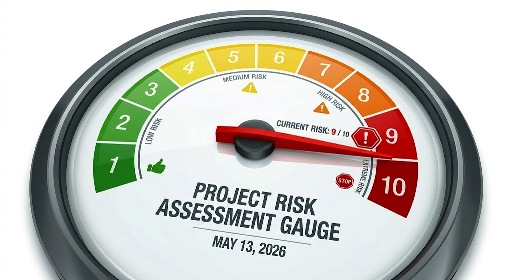
While the Program Document is "optional" in traditional workflows, treating it as such in an ST 2110 environment introduces systemic risks. Failure to lock these requirements early leads to cascading failures in network timing and thermal management.
1. The "Thermal Tax" Underestimation
Risk: Assuming existing HVAC capacity can handle high-density IP switch fabrics and COTS servers.
Impact: Critical equipment throttling, shortened hardware lifespan, and intermittent "mystery" packet loss due to switch overheating.
Mitigation: Require a formal Heat Load Study during Phase 1 based on the Program Document's equipment density targets.
2. PTP Domain Fragmentation
Risk: Room layouts and cable pathways defined without regard for network hop-counts and timing boundary requirements.
Impact: Excessive jitter and synchronization failures. If the physical layout forces an inefficient spine-leaf stretch, PTP stability is compromised.
Mitigation: Align the "Room Layout" section of the document with a preliminary PTP topology map.
3. Scope Creep Post-Sign-Off
Risk: Proceeding to detailed engineering without written client sign-off on operational considerations.
Impact: In SDI, adding a "user" is a router port; in 2110, it’s a bandwidth and orchestration calculation. Late-stage additions can break the leaf-spine oversubscription ratios.
Mitigation: Enforce a "Freeze Date" for the Program Document before the Network Fabric design begins.
Risk Matrix Summary
| Document Step |
Primary Risk |
Criticality |
| Architectural/Environmental |
Inadequate Power/Grounding for Stability |
Critical |
| Operational Considerations |
Workflow Mismatch with IP Orchestration |
High |
| Future Expansion |
Scaling limits of the initial Leaf-Spine |
Moderate |
UPDATED
5/14/26
V260504-1.0